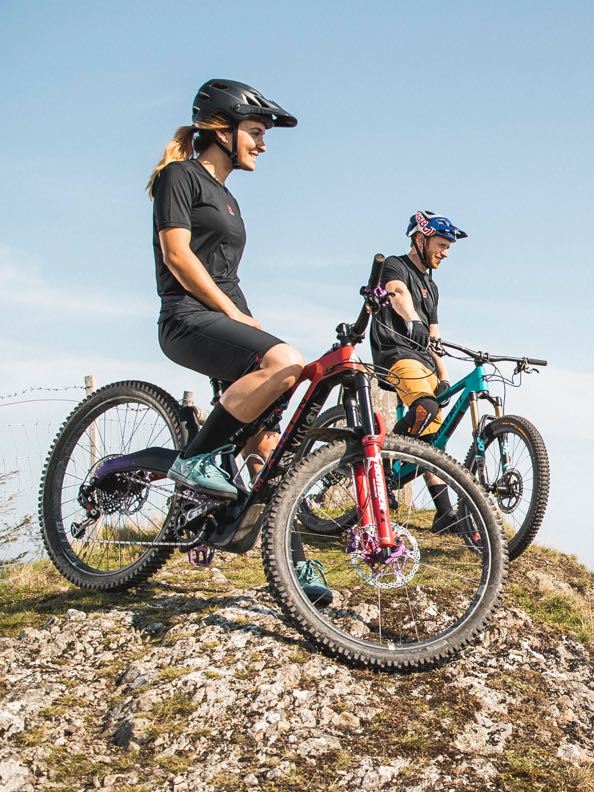
Your snowboard shape will impact how you ride, regardless of whether you're an experienced rider or a novice. There are many options available depending on your riding style. These shapes allow you to enjoy different terrains. There is a shape to suit your needs, whether you are looking for deep powder fields or open bowls or terrain parks.
The traditional snowboard shape is known as pretensioning. It has an open outer contact. This provides a more natural steering phase and allows for more side to side movement. However, it also creates less tension than full camber. This is particularly beneficial for beginners. It is also the most common shape on snowboards.
A camber snowboard shape is a combination of foot to foot camber and rocker. It has a lifted tail or nose. This board has less tension than a full camberboard and is available in twin- and directional snowboards. You can place a camber shape in the middle or under your feet.

A twin shaped snowboard has the same shape on the nose and tail, making it perfect for switch riding. This shape is great for all-mountain riding, whether you want to ride in terrain parks or on the switch. It is ideal for snowboarders who like jib boxes. It is popular with snowboarders looking for a board that has a balanced flex.
A directional snowboard has a sidecut slightly closer to the tail then the nose. This means that the snowboard will react differently to a switch. Freeriders and all mountain riders often use a directional shape because it offers stability at high speeds. This shape is also great for buttering. Although directional snowboards offer more resistance for turning, they are usually less durable than full camber and rocker shapes.
A snowboard with directional shape has a longer nose than a shorter tail. This makes it easier to steer in one particular direction. Directional shapes are also popular for freeriders, who enjoy riding in deep powder fields. These shapes provide the best stability when riding at high speeds. They also have soft tips. They also have a slightly higher slope in the rear. These shapes are still useful for riding in treetops.
Twin-shaped snowboards are similar to directional boards, but they have a set-back. This allows the board ride in the same manner, regardless of whether it's being ridden in a switch or regular. They are also symmetrical, making them a good choice for beginners. These boards are very popular with snowboarders who love to jump. The twin-shaped boards have a centered offset stance which means that inserts are always in the same place.
A hybrid twin shape is a mix of a camber-rocker and can be found on most twin-shaped snowboards. This shape has more tension in its tail than a camber and has faster edge changes than a rocker. It is a good choice if you like to take jumps.
FAQ
What is the average time it takes to learn how to snowboard or ski?
You may not be capable of learning how to snowboard quickly.
Most people start learning at about five years old. Some children start to practice when they are only two years old.
What skills are required for extreme sports?
You must practice each day to become proficient in extreme sports.
Learning new moves and tricks is part of practicing. You will improve your performance by doing this.
You should also be familiarized with safety rules before you attempt anything new.
For example, helmets should always be worn. You must keep in the sight of others.
Stunts should not be performed without a spotter. During your stunt, a spotter should be watching over you.
From where do extreme sports originate?
Parachuting was the beginning of extreme sports. Parachuting was developed during World War II. The 1942 parachute jump was the first.
Parachutists would jump from airplanes or gliders. They flew fast down to the earth. Then, they opened their parachutes.
Parachute jumps were dangerous. Many parachutists lost their lives during these events. Paragliding was popularized after the war.
1948 saw the debut of paraglider flying near Lake Garda, Italy. Paragliding is a growing sport. Paragliding is now enjoyed by thousands each year.
Para-gliding is different from parachuting in a crucial way. Para-gliders are able to land on the water instead of on the ground.
Who participates in the extreme?
Extreme sports can be enjoyed by people of all ages. Children are just as interested in extreme sports as adults.
Younger kids can play games like dodgeball, tag, and capture the flag. You can also join a team and compete against other kids.
Adults are able to participate in both individual and team sports. There are many ways to find a group to play in.
Ask someone who has already played it to show how you can start.
What happens if someone falls off a cliff while doing extreme sports?
Extreme sports involve falling off cliffs. You might break bones or even fracture your neck.
This injury could prove to be life-threatening. Falling from a height above 30 meters (100 feet) could result in your death.
What makes a sport extreme?
Since ancient times, sports have existed. They've evolved to be more than just competitions for athletes. Some sports have become part our culture.
Due to their intense competition, certain sports are considered extreme. Professional basketball players often play each other for hours on end. Other sports are more extreme as they require special equipment. Snowboarding, for example, involves riding down hills on two-wheeled boards attached to the bottom.
Others sports are considered extreme due to their different rules. For example, soccer is played differently than American football.
Some sports are extreme because they require their athletes to do feats such as gymnastics. Gymnastics, for instance, is a difficult sport because it requires athletes to balance on different objects while not falling.
Statistics
- Based on the degree of difficulty, the routine is scored on form and technique (50 percent), takeoff and height (20 percent), and landing (30 percent). (britannica.com)
- Approximately 50% of all wakeboarders have been participating in the sport for 1-3 years. (momsteam.com)
- Nearly 40% of all mountain bikers have at least graduated from college. (momsteam.com)
- Since 1998, overall participation has grown nearly 25% - from 5.2 million in 1998 to 6.5 million in 2004. (momsteam.com)
- Overall participation has grown by more than 60% since 1998 - from 5.9 million in 1998 to 9.6 million in 2004 Artificial Wall Climbing. (momsteam.com)
External Links
How To
What is the best way to start base jumping?
Base jumping is also known as parachuting or free-fall. It involves jumping from fixed objects such as buildings, bridges and towers without any equipment. To land safely, the participant must jump off the object. It is similar in nature to skydiving. You don't need a parachute and you don’t need to hold your breath until it opens.
The most common type is a wingsuit jumping suit. A wingsuit is composed of two pieces of fabric that are sewn together. The chest, arms and legs are covered by one piece and the legs by the other. The boots are specially designed to allow the jumper stand upright during flight. Jumpers tend to pull their feet up tight during descent. This causes the material that covers the legs to gather and form a large volume of air under the jumper. Once the air pocket has grown large enough, the jumper will open his/her parachut and land safely.
Base jumpers often use powered suits to get through the air quicker. A backpack containing batteries and an under-cloth jet pack are the two main components of powered suits. These small rockets shoot hot gas jets at high speeds from these packs. This creates a thrust that propels the jumper forward. These suits can be noisy and heavy.
BASE jumping is not for everyone. You need to be aware of the dangers involved in learning how to BASE jump. You could fall off a cliff or hit an obstacle upside-down or head-on. Or you could collide with another jumper. BASE jumping, while not always dangerous is dangerous. However, it can be very dangerous if done improperly. You can avoid injury by following these safety tips before trying to BASE jump.
First, practice safe BASE jumping techniques by practicing on a smaller hill. Before jumping from a bigger hill, you should take a few moments to become familiar with the terrain. Pay attention to weather conditions. You should not jump when the wind blows in your face. Also, be careful of foggy skies; if you can see more than 10ft ahead of yourself, you might need to wait until the clouds clear. Third, make sure you have the right gear. It is important to have proper gear. Fourth, you should have a plan. If something goes wrong, ask someone to help you. Finally, never jump alone. Always have someone else watching over you.