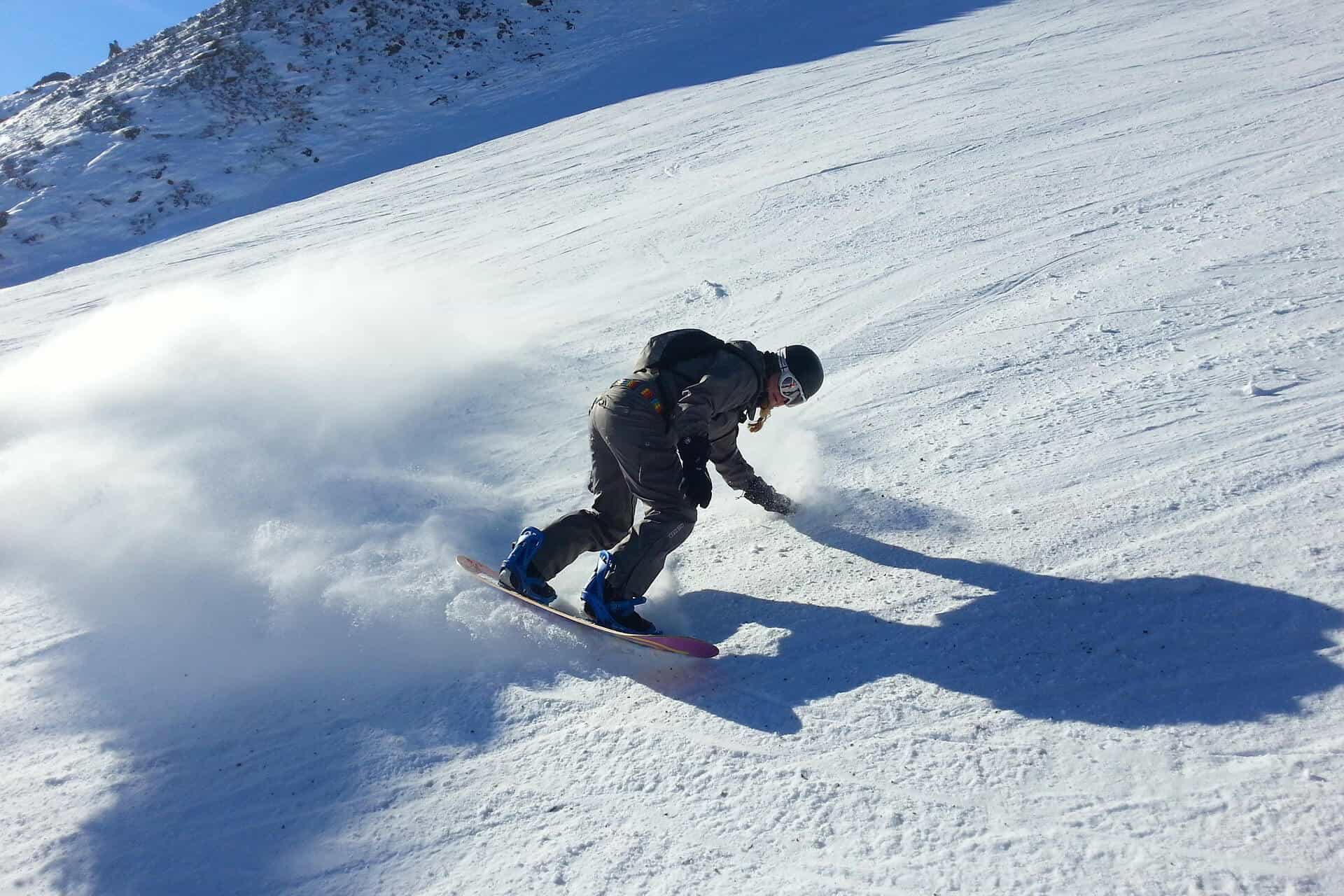
You may not be aware of what a silly snowboarding stance looks like. You place your right foot in front of the snowboard and then move it forward. It doesn’t necessarily mean that your snowboarding skills are poor. This simply means that you might have a different setup and ride differently than others who are just getting started.
Unlike skiing, which requires the simplest and most practical setup, a snowboard requires a more complicated and less intuitive learning process. There are two primary stances. Regular and goofy. It's impossible to choose one, but it is possible to learn how to ride in both to maximize your riding experience. The most important thing is to have fun and find the most enjoyable way of riding.
While both stances are important to practice, it's easier to learn the symmetrical one. You can easily ride in any direction using a symmetrical set-up. When you're ready to try the switch, make sure to square up your stance and use the appropriate hand. This will make it easier to plan for group runs, where switching is not an option.

Burton offers a comprehensive guide on the most important stances, tricks, and techniques. The Official Guide to Snowboard Stances is what they call it. Although it may sound like a commercial, the guide actually contains a list of all the tricks that most snowboarders have been taught in order to improve their riding.
You can generate more verticality depending on the stance you choose. This will allow you to increase your speed and improve your ability to ski down slopes. You might feel more confident about your abilities. As with any other sport, there's no such thing as a perfect stance. If your technique isn't perfect, you won't be able perform the tricks.
It's not hard to do, but it's a good idea. If you don't want to go up the mountain first, it could mean that your stance is not correct. When you're ready for the slopes you will know if you have the right stance. Once you get that down, you can be prepared for the more advanced rides.
You will improve your snowboarding performance by learning a few tricks. You will have more fun and improve your performance. It doesn't matter if you are a beginner or a pro. Knowing how to choose the right stance can make all the difference. Additionally, a funny stance is just the same as a logical stance. And you don't need to be lefty to be an excellent rider.

You can reap the benefits of practicing both routine and silly stances at the same time over the long-term. You'll soon be able to ride in either direction and can change your stance at will.
FAQ
How is parasailing different from parachuting?
Para-gliding is a form of flying above ground using a harness and a small sail. The harness lets you fly. It will keep you safe when you are falling through the sky.
Flying is easy with no equipment. You simply attach yourself to the sail. Then you go off. As you ascend, the wind pushes against your sail. This causes it to lift you.
As you glide along the ground, you keep moving forward. You continue to move forward with your momentum until you reach the end. At that point, you release your grip and fall back to earth.
When you're ready to start again, reattach yourself to the sail.
Parasailing is a rapidly growing sport. More than 1 million people participated in parasailing in 2013. It was almost double the number that did so in 2008.
Is extreme sport dangerous?
Extreme sports can be dangerous as they pose a risk of injury or death. There have been many deaths due to other causes such as drowning, electrocution and car accidents.
Even when you're doing something relatively safe like riding a motorcycle or rollerblading there are still injuries.
Extreme sports are dangerous because of the possibility of injury.
Due to the high risks involved in these extreme sports, the National Football League prohibits its members from participating.
Try extreme sports if you are interested.
What is the difference between extreme sports and regular sports?
Extreme sport requires physical exertion or skill in combination with a challenge.
It may also involve using equipment such as helmets, goggles, or unique clothing.
Extreme sports do not require any training, unlike traditional sports.
They are often outdoors and do not offer any protection in case of emergency.
Some extreme sports are illegal, while others are legal. It all depends on where and what type activities you're involved.
Check the local laws before undertaking extreme sports.
Are children allowed to do extreme sports?
It depends on whether you are referring to sports as an entire sport or a specific sporting activity. If they are talking about all sports, they should consider them. It would be different if they were talking about skiing or other types of sports. Extreme sports like bungee jumping are enjoyed by some while others enjoy more gentler options such as downhill ski. It also depends on how much risk is involved. For example, someone who enjoys bungee jumping might not enjoy skydiving because of a fear of heights.
What happens if someone does extreme sports and falls off a rock?
Extreme sports involve falling off cliffs. You might break bones or even fracture your neck.
This would be a serious injury. If you fall from a height of more than 30m (100ft), you could be killed.
Extreme sports can be dangerous.
Participating in extreme sports can lead to many different scenarios. It could be a fall from cliffs, an injury, or even being caught on camera by the media.
However, if you are aware and take precautions, it should not be a problem.
You just need to make sure that you have the right equipment and know how to use it properly.
There will always be someone to assist you if you get hurt while doing extreme sport. If you are injured, you will receive medical treatment.
Sometimes, injuries happen without warning. Sometimes, this happens because of poor judgment.
One example is climbing too close the cliff edge to avoid slipping over it. Or if you jump into icy water, you might suffer hypothermia.
Sometimes mistakes by others cause accidents. In some cases, injuries can be caused accidentally by other parties.
Sometimes bad luck can lead to unfortunate events. For instance, you might land on a rock when you are falling. Or you may be struck by lightning.
What are some examples of extreme sports?
Here are some extreme sporting events.
-
BASE jumping -- This extreme sport is dangerous. BASE stands for building antennae, span and earth. It involves jumping off a rock and parachuting down using a parachute. BASE jumpers have to pass strict tests before they are allowed to try this stunt.
-
Climbing -- Climbing can be considered an extreme sport. It involves climbing cliffs, trees, and other structures. Climbers often wear protective gear to protect themselves from falls.
-
Freestyle skiing -- Many consider freestyle skiing the most extreme form of skiing. Freestyle skiing is a combination of snowboarding and ice skating. It requires speed, agility, and balance.Skiers use special equipment called skis to move across the snow.They also use specially designed boots to grip the surface.
-
Paragliding -- Paragliding is similar to parachuting, except that paragliders fly through the air instead of falling to the ground. Paragliders are usually launched from mountainsides. The paragliders then pilot the plane using the ropes tied to its wings. He can pull the rope attached to his harness if he wants to land. The parachute automatically opens.
-
Surfing -- Surfers ride waves to reach the ocean floor. Surfers usually stand straight while surfing. The board is used as a surfboard. It allows the surfer a way to propel himself forward. When the wave recedes he paddles back to deeper water.
-
Snowboarding -- Snowboarding is another form of extreme sport. Snowboarders use special boards to glide down hills. To secure their feet to the boards, they also use special bindings. Snowboards usually come equipped with wheels so riders can roll down slopes more easily.
-
Skateboarding -- A combination of skateboarding, rollerblading, and skateboarding. Skaters use unique boards to navigate the city's streets. Instead of using rollerblades, skateboards can be used.
-
Skiing -- One of the oldest winter sports is skiing. The word ski originally meant "snowshoe." Skiing remains a favorite sport because it is a great way for people to get fit.
There are many types of skiing today, which is a far cry from when the sport was first introduced.
There is also cross-country skiing, alpine ski, and freestyle ski.
Alpine skiing is the most difficult. Cross-country skiing makes it easier. The easiest is downhill skiing. Freestyle skiing can combine all three.
How long does learning how to ski or snowboard take?
You might not be ready to learn how snowboarding is done right away.
The average person begins learning around five years of age. Some children practice even as young as two years.
Statistics
- Based on the degree of difficulty, the routine is scored on form and technique (50 percent), takeoff and height (20 percent), and landing (30 percent). (britannica.com)
- Boxing— 90% of boxers suffer brain damage over their careers, and this is not surprising in the least, considering that they are throwing punches at each other's heads. (rosenfeldinjurylawyers.com)
- According to the United States Parachuting Association, about 21 people die yearly from skydiving. (livehealthy.chron.com)
- Overall participation has grown by more than 60% since 1998 - from 5.9 million in 1998 to 9.6 million in 2004 Artificial Wall Climbing. (momsteam.com)
- Approximately 50% of all wakeboarders have been participating in the sport for 1-3 years. (momsteam.com)
External Links
How To
How can I learn to skateboard?
Skating, which is a sport you can use your feet to skate on ice or snow, is one of the most popular. Skating can be done alone or with friends. This is one of those sports that requires coordination and balance. It is important to know how to stand tall on the boards. Then practice balancing while moving forward and backward. Then, jump off steps or ramps. You'll be able to glide faster and farther once you have mastered these skills.
These are some tips for getting started in skating
-
Decide what type of skates to purchase. There are many different types of skates like inline skates or roller blades. Speed skates, figure and speed skates are all available. Choose the right type of skates depending on your level of expertise. If you are new to the sport, speed, inline and roller skates are great choices. Figure skaters are more likely to purchase boots that provide support for their movements.
-
Buy proper equipment. Your preference in gear depends on whether your goal is to compete or just skate around the park. You should choose durable and well-fitting skates if you intend to compete.
-
Try new techniques. Learning any skill takes practice. Don't wait to master a skill before you try it. Instead, try simple moves like walking backward, sliding sideways and spinning. This way, you won't feel intimidated when you attempt difficult maneuvers later.
-
Keep learning. Don't expect to become skilled overnight. Skaters who are the best spend many years perfecting their skills. They never stop learning. You have many options to improve your technique. Take lessons at a local rink. Or, watch videos online.
-
Be patient. Don't give up if you're having trouble understanding a tricky maneuver. Keep practicing. You'll eventually feel confident enough to do advanced stunts.
-
Have fun. Skating is an easy sport to learn for beginners. It doesn't require any special equipment or training. Skating is a lot of fun.